Log in to your account
Lost password?

Data Insights
Why South African Wines Are Poised for a U.S. On-Trade Breakthrough Beyond Value
South African wines remain misunderstood in the U.S. on-trade. Importer Peter Andrews explains what’s holding the category back—and what must change
06/02/2026
Views
Mark as favorite
Despite producing some of the most dynamic and site-driven wines in the world today, South Africa remains a marginal presence in many U.S. trade portfolios—often overlooked or reduced to a “value” proposition. Yet on the ground, a new generation of producers is redefining the country’s wine identity through terroir expression, thoughtful farming, and a collaborative, forward-looking culture.
To better understand why South African wine continues to be misunderstood in the U.S., and what it will take for the category to break through, this interview features insights from Peter Andrews, Founder of Culture Wine Co., a U.S.-based importer dedicated exclusively to South African wines. Drawing on his experience as a former buyer and his close relationships with producers across the Western Cape, Andrews shares candid perspectives on market perception, emerging regions and varietals, sustainability, and the strategic shifts needed for South Africa to claim its rightful place in the U.S. fine wine conversation.
Edited excerpts from the interview.
Before you founded Culture Wine Co., what was your impression of how South African wines showed up in U.S. trade conversations and portfolios?
Before founding Culture Wine Co., I worked as a buyer for retail outlets ranging from small independent shops to large-scale luxury retailers on both coasts of the U.S. Very rarely did sales representatives from either small or large distributors present South African wines unless I asked first. It simply wasn’t a focus. As a result, my exposure to South African wine was limited. What little representation did exist skewed heavily toward so-called “value” wines, which I don’t believe put the country’s best foot forward. Poor representation also led to largely negative or dismissive reviews, reinforcing existing misconceptions.
When I finally visited South Africa, I was completely blown away. The quality, diversity, and ambition I encountered were unlike anything I had expected. I wrote a business plan within two months, returned shortly after to meet producers, and launched Culture Wine Co. in under a year. I was inspired in a way I hadn’t been anywhere else in the wine world, and that inspiration has only deepened. Each trip gives me a greater appreciation for how challenging viticulture is there, and how remarkable it is that producers are making wines of this calibre. I’ve never felt more proud to represent a region.
After spending time on the ground in South Africa, what misconceptions do you think the U.S. trade still holds about the country’s wines?
The biggest misconception is that South Africa is only “cheap and cheerful.” In reality, there are well over 100 world-class producers making wines of exceptional quality.
This January (2026), I spent more than two weeks driving through the Western Cape, tasting with nearly 50 producers—both those I represent and those I’m prospecting. Every region has producers who can not only compete on the world stage, but in many cases outperform their peers elsewhere. South Africa is, in my view, the most exciting wine-producing country in the world today. The real challenge is simply getting the wines into the glass. Once people taste them—whether trade or consumer—they rarely pass. At that point, the wines do the talking.
From your sales data and market experience, which South African varietals are currently resonating most in the U.S.? Do you see stronger demand for coastal, site-driven wines versus broader regional expressions?
Chenin Blanc is the clear winner and is on a strong upward trajectory. As a co-founder of the Hella Chenin Wine Festival, I regularly taste Chenin from around the world, and South Africa is producing some of the most exciting and distinctive examples anywhere. Given that the country grows nearly 60% of the world’s Chenin Blanc, that momentum feels very real.
Syrah is another standout. Like Chenin, it thrives across the diverse soils and climates of the Western Cape and expresses terroir exceptionally well. My long-term goal is to represent Chenin and Syrah from every major region in South Africa, ideally with multiple producers per region, in order to showcase that site specificity.
Pinotage has also fully come into its own. In the early 2000s, only around 10 producers were making a fresher, more elegant style, as opposed to late-harvest, high-alcohol, heavily oaked wines. Today, there are closer to 30. Scions of Sinai, which we represent, consistently turns heads with its low-ABV, super-fresh, crunchy style. It has earned by-the-glass placements at iconic restaurants such as Chez Panisse, providing clear proof of the grape’s potential. Beyond these, varieties like Cinsault, Grenache Noir and Blanc, and even Colombar are producing truly compelling wines across the Western Cape.
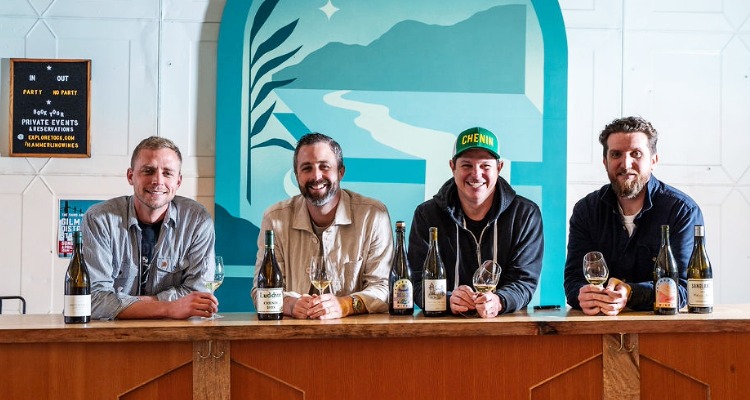
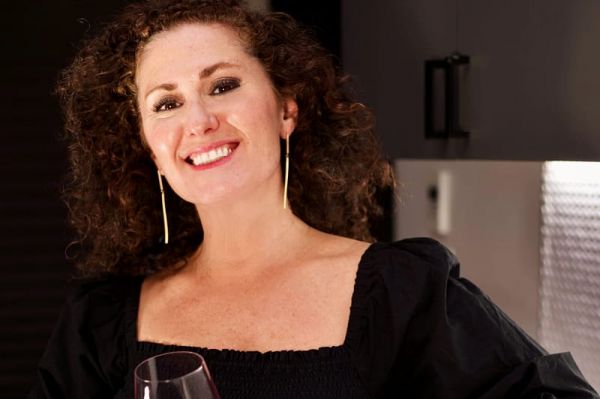
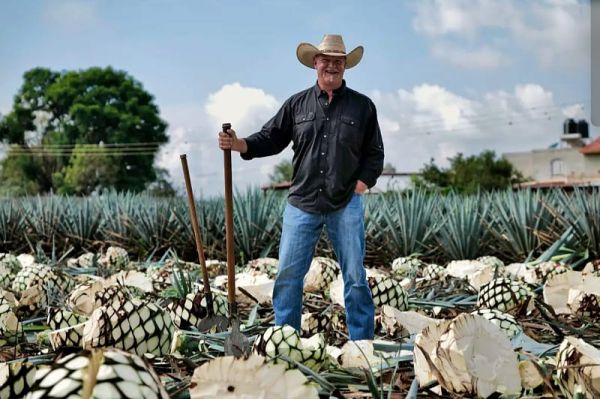
Left to right: Josh Hammerling (Founder of Hammerling Wines; Peter Andrews (Founder of Culture Wine Co); Alex & Marty Pitts (Founder of Maître de Chai)
How central are organic, biodynamic, and regenerative practices to South Africa’s current appeal in the U.S.? Do buyers respond more to sustainability credentials or to the sensory results in the glass?
South Africa’s warm, dry, and windy climate results in some of the lowest disease pressure in the world, making these practices particularly viable. While there are only a handful of certified biodynamic producers in South Africa today, many of the producers I work with practice organic or regenerative farming. These approaches are central to the new wave of South African winemaking.
Most younger producers in South Africa don’t own vineyards, so progress often depends on working with older-generation growers to demonstrate that organic practices not only benefit the environment but also improve grape quality. That transition can be challenging, but once growers see the results, the wines speak for themselves. This shift is happening, albeit slowly. There will always be large-scale, yield-driven farming, but those wines are increasingly out of step with today’s market. Consumers want environmentally conscious products, and buyers respond most strongly when sustainability translates directly into quality in the glass.
What types of wine programmes are most open to listing South African wines today? And what objections do buyers most commonly raise?
Programmes that foster curiosity perform exceptionally well. Tastemaker restaurants and retailers that encourage exploration have been among the strongest adopters. Fine-dining establishments have also been very receptive. I firmly believe South African wine can compete with the best in the world, and I actively seek placements in Michelin-starred and fine-dining restaurants to demonstrate that.
While it can be difficult to get in front of top wine directors, once the wines are tasted, they consistently deliver. Curated bottle shops and legacy retailers have also performed well, albeit for different reasons. The former thrives on discovery, while the latter serves Gen X and Baby Boomer customers who have often travelled to South Africa and struggled to find these wines back home. Seeing them available in the U.S. is genuinely exciting for that audience.
What stories resonate most with buyers and consumers: history, people, terroir, or social impact?
My focus is firmly on the new wave. There are two key chapters to this movement: those who emerged after the KWV lost monopolistic control of the industry in 1998, which dramatically improved quality, and a second wave beginning around 2015 that has continued to push boundaries. Seeing how far quality has progressed since 1998 is mind-boggling, and growers and winemakers are still only scratching the surface of what’s possible.
South Africa’s new wave is collaborative, open, and supportive. Competitors regularly share knowledge, advice, and even equipment. That mindset has played a major role in the country’s growth and will continue to do so. There is also a growing number of Black winemakers, and this must continue to expand. The Cape Winemakers Guild Protégé Programme is a standout initiative—a fully funded, three-year internship that places young Black winemakers with top producers. I’ve worked with two protégés, Kiara Scott Farmer and Shanice du Preez, and will continue to support the programme in any way I can. There is still much progress to be made, but meaningful steps are being taken.
What do you realistically see South Africa’s share of the U.S. wine market becoming over the next 5–10 years?
South African wine currently represents approximately 1% of U.S. imports. In 2025, volumes declined significantly due to tariffs and trade uncertainty. With more stable and predictable trade policy, South Africa could be well positioned for growth.
Quality continues to rise, and a generation of talented winemakers is coming into its own. I genuinely believe South Africa could double or even triple its share of the U.S. market over the next decade under more favourable trade conditions.
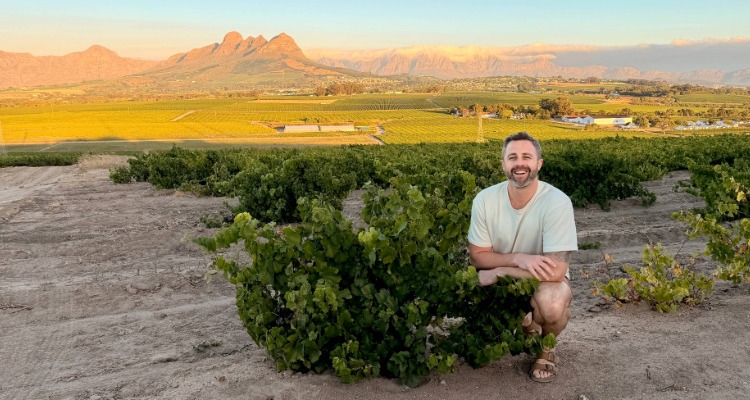
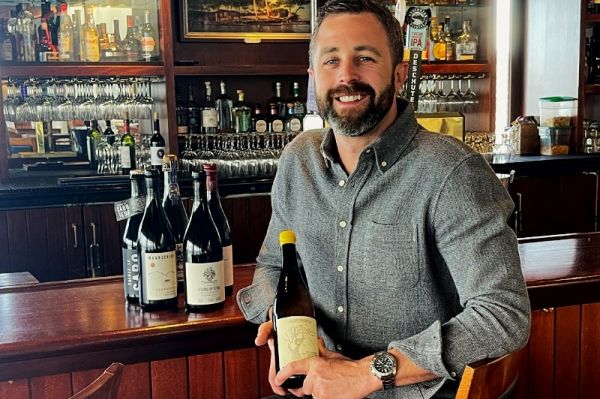
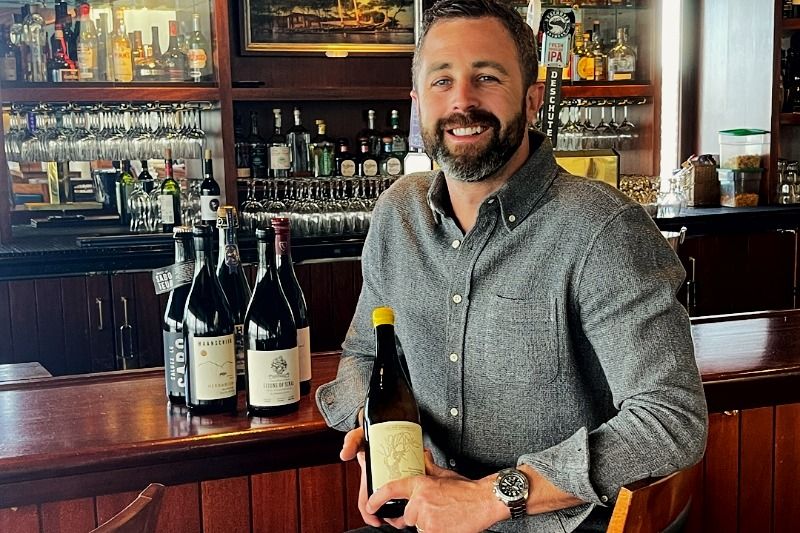
Peter Andrews, Founder of Culture Wine Co.
Are there any emerging regions within South Africa that U.S. buyers should be paying attention to now?
Swartland is well documented, yet still unfamiliar to many U.S. buyers, leaving significant runway for growth. Bot River and the greater Walker Bay also deserve far more attention—established regions producing exceptional wines that remain underrepresented.
Citrusdal and Piekenierskloof are producing outstanding Chenin Blanc and Grenache with remarkable acidity and balance. Looking further ahead, Sutherland is particularly exciting. At elevations above 1,450 metres—high enough to see snow—it is pushing viticultural limits. While it may take time, early Syrah from the region is very promising.
What needs to change—structurally or culturally—for South African wine to break past its current ceiling in the U.S.?
We need to stop framing South African wine as “value.” Even at the highest quality levels, wines are often praised for being good because they’re cheaper than their European counterparts. That framing creates a ceiling that is extremely difficult to break.
Instead, the focus should be on people, place, and culture—on how challenging farming can be, how low yields often are, particularly with bush vines, and how deeply minimal-intervention practices are embedded. These wines deserve placement in the world’s best restaurants and wine shops on their own merit. Structurally, trade uncertainty and tariffs have made importing more difficult. While growth remains possible, greater stability and predictability would significantly reduce barriers and allow the category to reach its full potential.
If you were advising a U.S. distributor considering South Africa for the first time, where would you suggest they start?
I believe in starting with breadth, then building toward depth. Begin with a Chenin and a Syrah from both warm and cool climates, along with at least one Cap Classique. These categories build confidence quickly and demonstrate range without overwhelming buyers. Once trust is established, it becomes much easier to introduce more niche varieties and producers. Building trust is everything—you have to walk before you run.
Header image sourced from Peter Andrews.